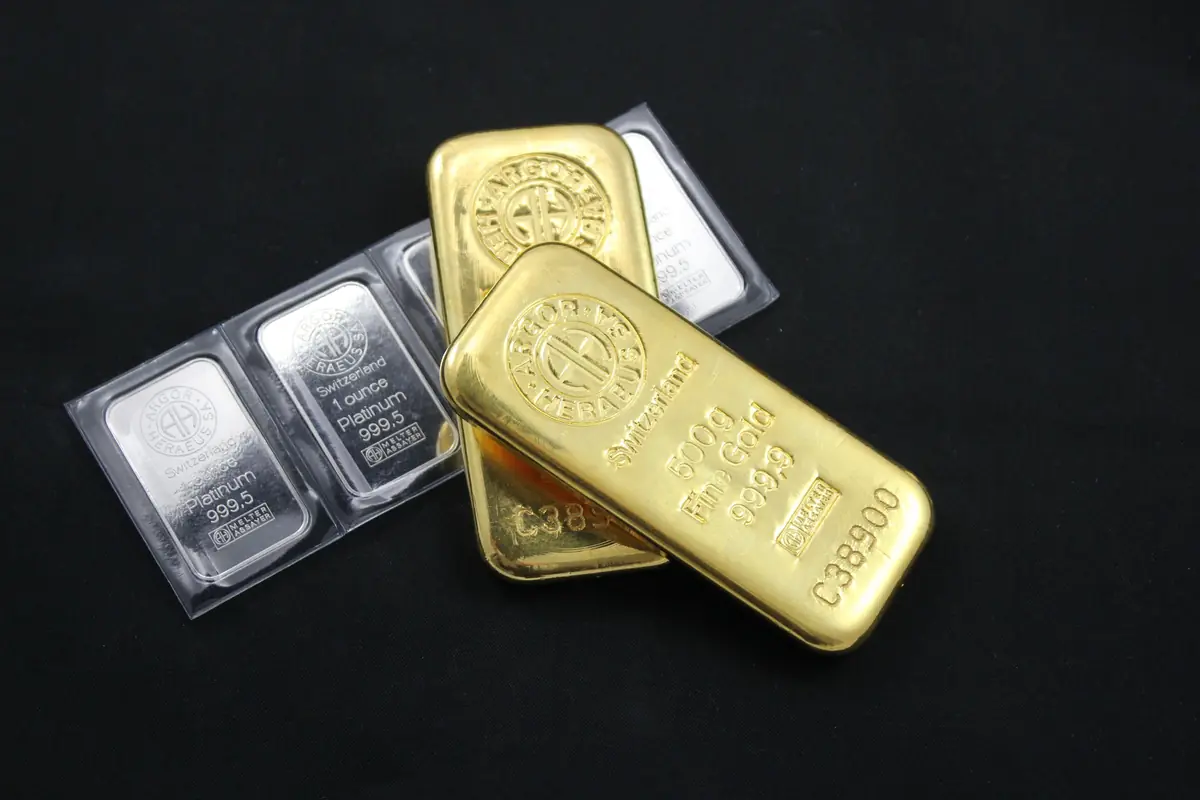
You do not need the assay card to sell a gold bar. A bar without its card is still gold of a known weight, and a competent buyer verifies it with testing either way. What the card does is make a bar quicker to authenticate and easier to resell, so a bar from a recognized refiner that is still sealed in its original card can bring a slightly better price than the same bar loose. When you are ready to sell, the bullion counter at Buyers of New York tests and prices bars in the same visit, card or no card.
The card is also not proof of anything on its own. Counterfeiters copy assay cards along with the bars inside them, so the card, the serial number and the bar itself are all checked against each other, and the metal is tested whatever the packaging says. The rest of this article explains what each of those pieces tells a buyer, and what happens when one is missing.
What an assay card is
An assay card is the sealed, tamper-evident package that many smaller gold bars are sold in. It is usually a credit card sized holder with a clear blister over the bar and printed information on the card behind it. A typical card shows the refiner’s name and logo, the bar’s weight, its fineness (for example 999.9), a serial number and the signature or stamp of the assayer who certified the bar. Some cards add holograms, microprint or other security printing.
Cards are most common on minted bars, which are stamped from rolled gold strip and have sharp edges and crisp designs, in sizes from 1 gram up to 100 grams or a few ounces. Larger bars, such as 10 ounce, kilo and 100 ounce bars, are often cast, meaning poured into a mold, and they usually come without a card. Their stamps carry the same information directly on the metal, and some come with a separate paper certificate.
The idea is simple: the refiner tested the gold, sealed it, and printed the result. As long as the seal is intact and the serial numbers match, the next buyer can rely on that chain more easily than on a loose bar of unknown history.
What is stamped on the bar itself
Whether or not it has a card, a bar from a reputable refiner carries the key information on its face. Expect to see:
- Refiner mark. The name or hallmark of the refiner or mint that made it.
- Weight. In grams, troy ounces or kilos, for example 1 oz, 100 g or 1 kilo. A kilo bar holds about 32.15 troy ounces.
- Fineness. Usually 999.9 or 999.0 for small bars, sometimes written as 9999 or 24K.
- Serial number. A unique number on most minted bars and on cast bars of any size from major refiners.
- Assay or quality marks. On some bars, the word assayer or a melter’s mark, and on some a year.
The serial number is the most useful single detail. It should match the card exactly, character for character. A carded bar whose serial does not match its card is treated as a problem until proven otherwise, and an uncarded bar with no serial number at all, from an unknown maker, is generally priced as gold to be tested rather than as a branded bullion product.
Large bars and the Good Delivery standard
At the top end of the market, the London Bullion Market Association sets the Good Delivery standard used for the bars that move between banks and vaults. A Good Delivery gold bar weighs between 350 and 430 troy ounces, usually close to 400, with a minimum fineness of 995.0, and carries the refiner’s mark, serial number, fineness and year of production. These bars do not come in assay cards. Their credibility comes from the refiner being on the Good Delivery list and from the bar never leaving the chain of approved vaults and carriers.
Once a bar like that leaves the vault system and ends up with a private owner, it is still gold, but it has lost that chain, which is why private sales of large bars always involve testing. The same logic applies at smaller sizes. A bar’s packaging and history are what let the next buyer skip steps, and when they are missing, the steps come back.
Does opening the card lower the value
For small branded bars, often yes, by a modest amount. A sealed card lets a dealer resell the bar quickly with its original certification. Once the card is cut open, the bar has to be sold as a loose bar, and it needs to be tested before anyone pays a branded premium for it again. Buyers of New York’s own guidance is that an unopened PAMP 1 ounce bar in its assay card is worth more than the same bar removed from packaging, because the card provides independent verification of authenticity and purity.
On larger bars the difference is smaller, since they trade much closer to spot anyway and are tested routinely. Either way, the advice is the same: do not open a sealed card to look at or weigh the bar. If a card has already been opened, keep it and bring it with the bar. A matching serial number on an opened card still helps.
When the card is lost or damaged
Refiners generally do not reissue lost assay cards. A bar without its card is simply sold as a loose bar, and it is authenticated by testing the bar itself. That is routine. Many bars that come in from estates, safe deposit boxes and old collections have long lost their packaging.
A damaged card, one that is cracked, peeling or yellowed, is treated about the same as a sealed one if the seal is intact and the serial number is readable. Do not tape it, re-seal it or try to repair it, since anything that looks like tampering raises questions rather than answering them.
For bars still in their cards, storage is worth a thought. Keep carded bars flat, away from heat and direct sunlight, and out of tight stacks where the blister can be pressed or split. Rubber bands, paper clips and tape on the card itself all leave marks or residue. A simple bullion box or a padded sleeve does the job. None of this changes the gold inside, but it keeps the card looking like what it is: an intact, original package that the next buyer can accept without hesitation. Keep invoices in the same place as the bars, so the serial numbers on the paperwork and on the cards can be matched quickly whenever the bars are sold.
Fake cards and how bars are actually authenticated
Counterfeit bars are a real problem in the bullion market, and many of them come in convincing counterfeit cards. Some copy a real serial number and print it on hundreds of fakes. Others are gold plated over a core of a cheaper metal. Tungsten is the classic choice because its density is almost the same as gold’s, about 19.25 grams per cubic centimeter against gold’s 19.32, so a tungsten core bar can weigh exactly what it should.
That is why no single test is enough. A professional buyer combines several:
| Check | What it shows | Limitation |
|---|---|---|
| Visual and serial check | Correct design, fonts, finish, and a serial that matches the card | Good fakes copy designs and serials |
| Weight on a certified scale | Bar weighs what it claims | Tungsten core fakes can match weight |
| Dimensions with calipers | Length, width and thickness match the refiner’s specification for that weight | Needs published specifications for the exact bar |
| XRF analysis | Composition and purity of the surface metal, in seconds, without damage | Reads the surface, so plating over a core needs other checks too |
| Electrical or ultrasonic testing | Detects a different metal inside the bar, in some cases through packaging | Requires specialized equipment and calibration |
| Refiner verification tools | Matches the bar’s surface or serial to the refiner’s records | Only for refiners and products that support it |
At Buyers of New York, bars are weighed on DCA-certified calibrated scales, verified with XRF analysis in front of you, and serial numbers on assay carded bars are checked where applicable. Testing is non-destructive. A real bar passes quickly; a fake one usually fails more than one test.
Some refiners now add their own verification. PAMP, for example, introduced a system called VERISCAN in 2015 that scans the surface of bars carrying the VERISCAN logo on their CertiPAMP packaging and checks them against the refiner’s records. Tools like this add confidence, but they supplement physical testing rather than replace it.
Why the refiner matters to the price
Bars from LBMA accredited refiners and major government mints, names like PAMP Suisse, Valcambi, the Perth Mint and the Royal Canadian Mint, are recognized everywhere and are easy to resell, so they command the strongest premiums. A generic poured bar with no recognizable refiner mark is still bought, but it trades closer to spot because the next buyer has to do more work to trust it.
Here is a worked example with hypothetical numbers. Suppose spot gold were $2,500 an ounce and you had a 10 ounce bar. The melt value is $25,000. If a buyer pays a small premium per ounce over a generic bar for a recognized refiner in its original packaging, say $20 more per ounce, that is $200 on the bar. If the same bar has lost its card, part or all of that difference can disappear. Compare that with the daily movement in gold: a 1 percent change in spot moves the same bar by $250. The card and the brand matter, but the spot price still does most of the work. How bullion and coin offers are calculated from spot is covered in more depth in how gold buyers calculate price.
Bars versus coins
Recognized government bullion coins, such as American Gold Eagles, Maple Leafs and Krugerrands, often carry a slightly higher premium than generic bars of the same weight, because legal tender status and familiar designs make them easy to resell. They also do not depend on a card for their credibility, since their weights, dimensions and designs are published by the issuing mint. For a side by side look at the two most common coins, see American Eagle vs Maple Leaf.
Bars, on the other hand, usually carry lower premiums per ounce at purchase, especially in larger sizes, which is why many investors hold both.
What to bring and how to reach us
Bring the bars as they are: sealed cards unopened, opened cards with their bars, any boxes, sleeves or certificates for larger bars, and the original purchase invoices if you have them. Invoices help match serial numbers and show where the bars came from, which is useful for estate sales. Bring a government issued photo ID as well. Bars without cards are welcome and are tested and priced in the same visit.
Buyers of New York is at 30 W. 47th Street, Suite 8006, in the Diamond District, with an elevator to the 8th floor. Walk-ins are welcome Monday through Friday, 10am to 6pm, and payment is made the same day, with same-day wire available for very large lots. For kilo bars or larger lots, call ahead at (212) 642-4345 so we can prepare. You can read more about refiners, bar sizes and how bullion is priced on our gold bullion page. Bullion coins brought with bars are priced in the same visit, as described on our gold coins page.
More questions sellers ask
Can I get a replacement assay card from the refiner?
Generally no. Refiners do not usually reissue lost cards. A bar without its card is sold as a loose bar and authenticated by testing the bar itself, which is routine.
Is a gold bar with an assay card always genuine?
No. Counterfeit bars are often sold in counterfeit cards, sometimes with copied serial numbers. The card is a starting point, and the bar is still weighed, measured and tested before any offer.
Do cast gold bars come with assay cards?
Usually not. Cast bars, which are poured into molds, are typically larger and carry the refiner mark, weight, fineness and serial number stamped directly on the metal. Some come with a separate paper certificate instead.
Will testing damage my gold bar?
Standard testing is non-destructive. Weighing, measuring and XRF analysis leave no mark on the bar, and XRF can read the surface metal in seconds. Sealed cards do not need to be opened for most checks.
Should I bring the receipt from when I bought the bar?
Yes, if you have it. An original invoice helps match serial numbers and shows where the bar came from, which speeds up the evaluation. It is helpful but not required.