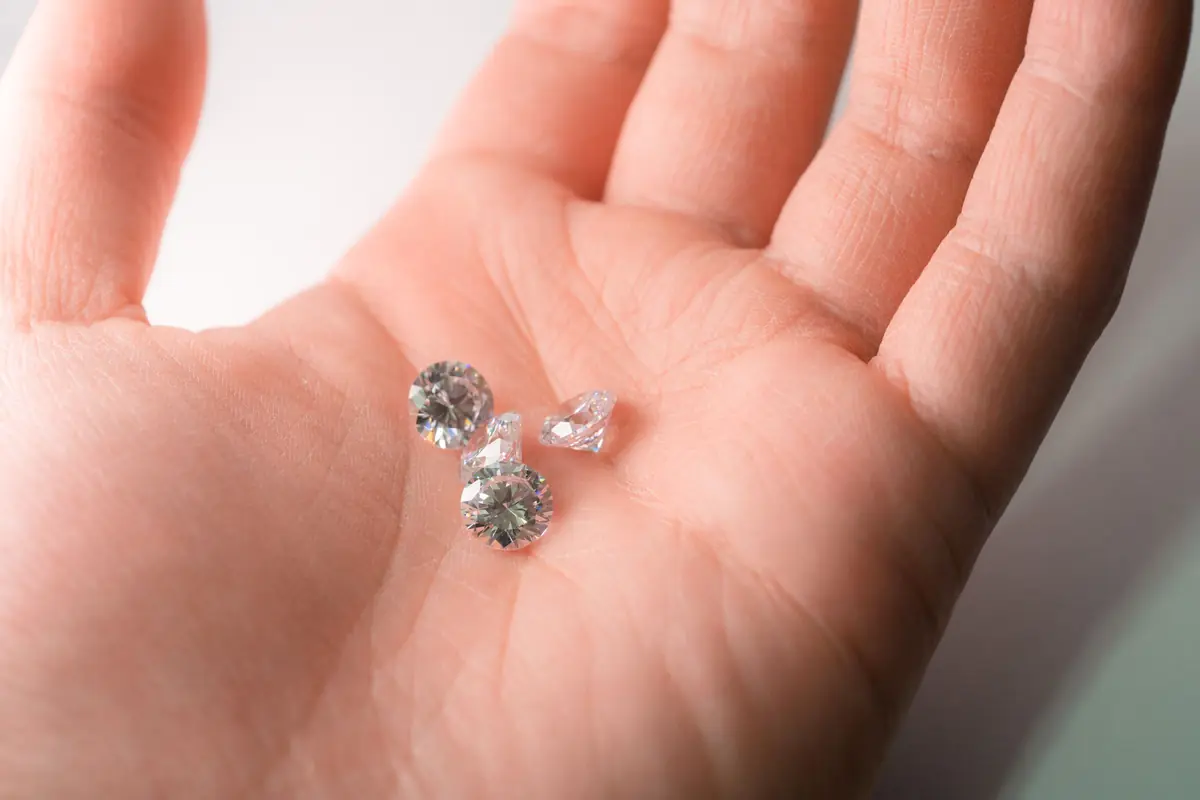
You do not need a GIA certificate to sell a diamond. A qualified buyer can grade an uncertified stone in front of you and make an offer on it, and most diamonds in older jewelry have never been near a laboratory. What a GIA report does is remove doubt: it gives the buyer an independent record of the stone’s weight, color, clarity and cut, which usually makes the offer firmer and often makes it higher.
Whether it is worth getting a report before you sell depends on the stone. For a large or high-quality diamond, it can pay for itself. For small stones, accent diamonds and most everyday jewelry, it rarely does. This article explains what a grading report contains, how GIA, IGI and other reports are treated in the trade, how buyers handle uncertified stones, and how to decide whether to send a stone to a laboratory first.
What a GIA report is, and what it is not
The Gemological Institute of America is a nonprofit institute established in 1931. It developed the grading language most of the trade still uses for diamonds, including the D-to-Z color scale and the clarity scale from Flawless to Included. Its laboratory grades diamonds submitted to it and issues reports describing them.
A GIA diamond grading report typically records:
- Carat weight, to the hundredth of a carat.
- Color grade, on the D-to-Z scale for colorless to light yellow diamonds.
- Clarity grade, from Flawless through the Included grades, usually with a plotted diagram showing the inclusions.
- Cut grade for standard round brilliants, along with polish and symmetry.
- Measurements and proportions, which help match the report to the stone.
- Fluorescence, the stone’s reaction to ultraviolet light.
- Any laser inscription on the girdle, often the report number.
What it does not contain is a price. GIA states that it does not appraise diamonds, and its reports do not state a value. People often call a report a “certificate,” but it is a grading document, not a guarantee and not a valuation. The dollar figure comes from whoever is buying, using the grades as an input.
Why a report changes the offer
Diamond prices step up and down with each grade. The difference between G and H color, or between VS2 and SI1 clarity, can move the value of a one-carat stone by a meaningful percentage. When a buyer grades a stone without a report, they have to price in the chance that their grade is off by one step, and most will lean conservative.
A report from a trusted laboratory takes most of that uncertainty away. It also makes the stone easier for the buyer to resell, because the next buyer in the trade will accept the same report. Buyers of New York’s own pages say this directly: a GIA certificate is not required, but it improves the offer, and its Chelsea diamond page describes it as typically adding 10 to 20 percent. That figure is the business’s own statement about its offers, not a market rule.
GIA, AGS, IGI and other laboratories
Not every report carries the same weight in the trade. Buyers form views of laboratories based on how consistently their grades hold up when stones are regraded.
| Report | How the trade generally treats it | Notes for a seller |
|---|---|---|
| GIA | The reference standard for natural diamonds | Verify the number online with GIA Report Check. |
| AGS | Well regarded, particularly for cut grading | Report sets have changed over the years; bring the original document. |
| IGI | Widely used, especially for lab-grown diamonds and retail jewelry | Very common on lab-grown stones; check whether the report says laboratory-grown. |
| Other or older laboratory reports | Often regraded by the buyer rather than taken at face value | Still useful for identification and measurements. |
| Store “certificates” and appraisals | Treated as descriptions, not independent grading | Helpful history, but the stone will be graded fresh. |
Buyers of New York’s pages say it accepts GIA, AGS, IGI and EGL reports, as well as uncertified stones. In practice, any report is useful because it tells the buyer what the stone was graded as, and a buyer can check that against what they see.
The details on a report that buyers read closely
Sellers tend to look at the headline grades. Buyers read the whole page, because the smaller entries can move the price as much as a grade:
- Fluorescence. Rapaport’s own explanation of its price list says the list assumes no strong or medium fluorescence. In high colors, strong blue fluorescence can make a stone look slightly milky and is often discounted; in lower colors it can be neutral or even helpful, because the blue glow offsets some yellow.
- Proportions. Depth and table percentages, girdle thickness and culet size show whether a stone was cut for beauty or to save weight. A stone cut deep to reach 1.00 carat can look smaller face up than its weight suggests.
- Comments. Notes such as additional clouds or pinpoints not shown, or a clarity grade based on clouds, tell a buyer what the plot alone does not.
- Symbols on the plot. The key to symbols can include features such as laser drill holes, which tell a buyer the stone was treated to lighten a dark inclusion.
- Report date. An older report is not wrong, but a buyer will check for wear and damage since it was issued.
How a buyer matches a report to a stone
A report describes a stone, not necessarily the stone in front of the buyer. Before relying on one, a careful buyer will:
- Check the report number against GIA’s online Report Check database, which shows the details GIA has on file for that number.
- Look for the laser inscription on the girdle under magnification. It is invisible to the naked eye but readable at 10x, and often matches the report number. Not every stone has one.
- Compare measurements and weight. A loose stone can be weighed and measured; a mounted stone can be measured and its weight estimated.
- Compare the inclusions with the plotted diagram, where the report has one.
- Look for damage since grading. A chip on the girdle or a worn culet does not show on a ten-year-old report, and a stone that has been recut will not match its original weight.
This matters because counterfeit and altered paperwork exists. GIA has published laboratory notes on laboratory-grown diamonds carrying counterfeit GIA inscriptions, which is one reason buyers test the stone itself as well as reading the paperwork.
How uncertified diamonds are graded at the counter
Most diamonds a buyer sees have no report at all: engagement rings bought decades ago, estate pieces, earrings, tennis bracelets. Those stones are graded in house. The usual process:
- Identification first. The buyer confirms the stone is a diamond, and checks whether it is natural or laboratory-grown, since the two are priced very differently. More on that in our article on lab-grown and natural diamond resale.
- Color is judged against master comparison stones under controlled, neutral lighting, ideally with the stone loose or viewed from the side.
- Clarity is judged under 10x magnification, looking at the size, number, position and visibility of inclusions.
- Cut and proportions are assessed by eye and with measuring tools.
- Weight is measured exactly on a loose stone or estimated from measurements for a mounted one.
Buyers of New York’s pages describe this process as done by its GIA-trained gemologists in front of the seller, with each factor explained. Because a mounted stone can hide part of its clarity and color, some buyers will ask to unset a significant stone before making a final offer.
Should you get a report before you sell?
A laboratory report costs money and takes time. The stone has to be unmounted, shipped or delivered to the laboratory, graded and returned, and fees rise with carat weight. Whether that is worthwhile depends on how much the report could change the price.
A report is more likely to pay off when:
- The stone is around one carat or larger.
- It looks high in color and clarity, where one grade makes a big difference.
- It sits just above a size threshold such as 1.00 or 1.50 carats, where the exact weight matters.
- You plan to sell it privately or through a channel where buyers will not examine it in person.
A report is less likely to pay off when:
- The stones are small accent or melee diamonds.
- The diamond is clearly lower in color or clarity.
- The stone has visible damage that will limit its value either way.
- It is laboratory-grown, where resale value is low and the fee can eat a large share of it.
A sensible middle path is to get an offer on the uncertified stone first and ask the buyer directly whether a report would change it, and by roughly how much. A buyer who grades a stone in front of you can usually tell you whether it is the kind that benefits from a report.
How the report feeds the price
Once grades are settled, by report or by the buyer, a natural white diamond is priced against wholesale market data for its weight, color, clarity and cut. Many buyers benchmark against the Rapaport price list and recent trades, offering a percentage of the list figure that reflects the stone’s quality and how easily it will resell. That process, and why it sits below what retail stores charge, is covered in the Rapaport price list explained. Buyers of New York’s pages say it pulls comparable sales for certified stones and shows the seller the Rapaport figure it is using before making an offer.
Common misunderstandings about diamond reports
- “No certificate means it is fake.” Most natural diamonds in older jewelry were never sent to a laboratory.
- “The certificate says what it is worth.” Laboratory reports describe the stone; they do not price it.
- “Any certificate is as good as GIA.” The trade weighs laboratories differently, and some reports will be regraded.
- “An appraisal is a certificate.” An appraisal is a valuation written by an appraiser, usually for insurance. It is not an independent grading report.
- “The report is forever.” The grades describe the stone as it was on the day of grading. Damage or recutting since then changes the stone.
What to bring
Bring the diamond or the jewelry it is set in, any grading report in its original form, older appraisals and receipts, and a government photo ID. If you have no report, bring the stone anyway; it will be graded in front of you. Buyers of New York is at 30 W. 47th Street, Suite 8006, with GIA-trained gemologists on site and walk-ins welcome Monday through Friday from 10am to 6pm. For a significant stone, call (212) 642-4345 ahead so a senior gemologist is available. You can read how stones are graded and priced on the business’s diamond evaluation page, and when you are ready, bring the stone in for grading and an offer, certified or not.
More questions sellers ask
How do I check that a GIA report is genuine?
Enter the report number in GIA Report Check online and compare the details with the paper report. A buyer can also read the laser inscription on the girdle, if there is one, and compare the stone measurements.
Does a GIA report say how much my diamond is worth?
No. GIA states that it does not appraise diamonds and its reports do not give a value. The report describes the stone, and buyers use those grades to price it.
Can I sell a diamond that is still in its setting?
Yes. A buyer can grade a mounted stone, though the setting can hide part of the color and clarity. For a significant stone, a buyer may ask to unset it before a final offer.
What if my report is very old?
The grades describe the stone as it was when graded. A buyer will check the stone for chips or wear since then and match it to the report by measurements and inscription.
Is an IGI report as good as a GIA report?
IGI is widely used, especially for lab-grown diamonds and retail jewelry. For natural diamonds, many dealers treat GIA as the reference standard, so the weight a report carries depends on the stone and the buyer.