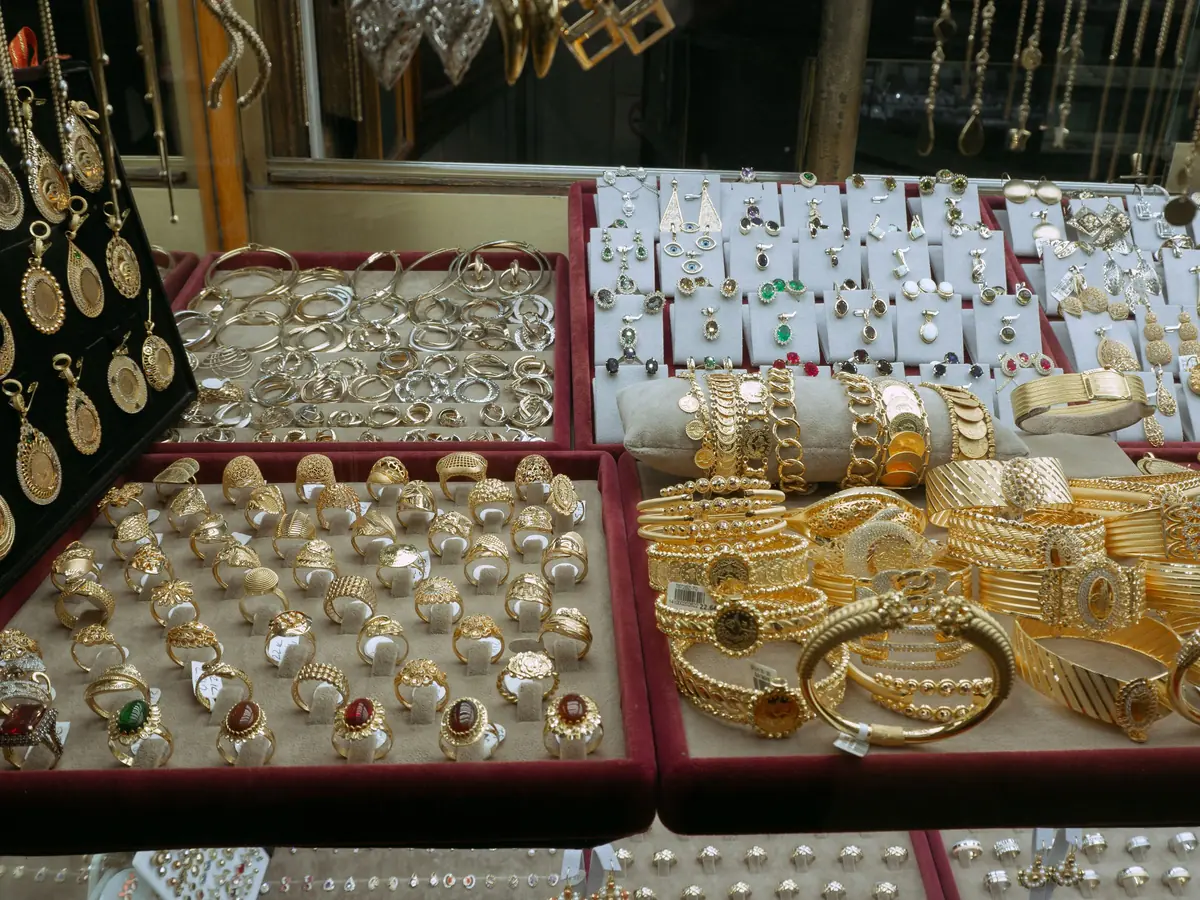
The most money for gold usually comes from the buyer with the shortest path to a refiner and the lowest costs per transaction, who tests and weighs in front of you and prices against the live spot price. In practice that tends to be a busy precious metals buyer that sells in volume to refiners, not a business where buying gold is a side line, a lender that would rather write a loan, or a company that needs your package in its warehouse before it names a price.
No channel wins every time, though. A well run neighborhood jeweler can beat a careless dealer, and a single offer from anyone tells you very little. What follows explains how each type of buyer makes its money, why that shapes the number you get, and how to check any offer against the metal you actually have.
Why the same chain gets five different offers
Gold jewelry sold for its metal content almost always ends up in the same place: a refinery, where it is melted, assayed and turned back into fine gold. The refiner pays for the fine gold it recovers, minus its charges. Every business between you and that furnace takes a margin, and each one has costs that come out of the price before you see it.
Picture three possible routes for a broken 14K rope chain:
- Short route: you sell to a buyer who melts or lots it with other scrap and ships directly to a refiner.
- Longer route: you sell to a store that holds scrap until it has enough to sell to a wholesaler, who then sells to a refiner.
- Longest route: you sell through an intermediary that collects scrap from many small shops or from the public by mail, then resells it up the chain.
The chain contains the same gold in every case. The difference is how many businesses need to be paid out of it, and how much each one spends on rent, staff, advertising and the risk that the gold price moves while the metal sits in a drawer.
What a refiner pays, and why nobody pays 100 percent
A refiner does not pay the full spot value of a lot. It typically settles on the assayed fine content, after deductions for melt loss, refining charges and sometimes a minimum lot fee. Solder, steel parts inside clasps, dirt and base metal alloy all burn off or separate in the melt, which is why a “14K” lot can come back slightly under its stamped fineness. Larger lots settle on better terms than small ones, so a buyer who sends a lot of material can get paid more per ounce than one who sends a little.
The buyer at the counter also carries price risk. Between paying you and getting paid by the refiner, the spot price can move against them. Then there is working capital: cash paid out today that comes back days or weeks later. A high volume buyer spreads those costs across many transactions and can work on a thinner margin. A store that buys a few pieces a week cannot.
For the full arithmetic behind a counter offer (karat percentages, grams, pennyweights and troy ounces), see how gold offers are calculated from spot price and karat. The short version: an offer is a percentage of the melt value, and the useful question about any buyer is what percentage it is paying and why.
Retail jewelry stores and mall counters
For most retail jewelers, buying gold from the public is a side business. Their main business is selling new jewelry, and their costs reflect that: prime retail rent, display cases, sales staff on commission, inventory, insurance and marketing. When they buy scrap, the price has to cover a share of those costs, and the metal often travels through at least one more set of hands before it reaches a refiner.
Things a seller commonly runs into at a retail counter:
- Store credit offers. Some stores offer more in credit than in cash. That can be fair if you were going to buy something there anyway, but it is not comparable to a cash offer.
- Limited testing. A store that buys occasionally may rely on stamps and a quick acid touch rather than an XRF reading, and may price conservatively to cover the chance of being wrong.
- Flat pricing. Some quote one number for a whole bag rather than a price per gram for each karat, which makes it hard to see what you are being paid.
None of that makes a jeweler dishonest. It means its offer for scrap gold has to absorb a cost structure built for selling, not buying.
Pawn shops: a loan and a sale are different transactions
A pawn shop can either lend money against your gold or buy it outright, and the two numbers are not the same thing. A pawn loan is sized so that the lender is covered if you never come back: the loan amount sits well below what the shop could get for the item, because the shop carries interest, storage, the redemption period and the risk of the price dropping before it can sell. If you plan to keep the piece, that structure can make sense. If you plan to let it go, a loan is a roundabout way to sell at a discount.
When a pawn shop buys outright, its offer still reflects a business model built around lending and retail resale of used goods, with a counter staffed for both. In New York, pawnbroking is regulated separately from secondhand dealing, with its own license and interest rules. The mechanics of loans, rates and missed payments are covered in how pawn loans work in New York.
Mail-in gold buyers
Mail-in buyers send you an envelope or a kit, you ship your gold, and they test it and make an offer after it arrives. Their costs look different from a store’s: advertising to reach sellers, shipping and insurance, and processing every package, including the many that hold only a few grams.
The bigger issue is who holds the goods. Once your package is in their building, you are the one who has to act to get it back. Before mailing anything, read the terms for these points:
- Offer before payment, or payment as the offer. Some send an offer you accept or reject. Others simply send payment, and cashing or depositing it counts as acceptance.
- The return window. How many days you have to reject an offer, and from what date the clock runs: the day they send it, or the day you receive it.
- Who pays return shipping and insurance if you decline.
- How long your items are held before they are melted. After the melt, there is nothing to return.
- Whether you see the test results, piece by piece, with weights and karat readings.
If you do use a mail-in service, photograph and weigh everything before shipping, ship insured with tracking, and keep a list of every piece in the package. Without your own weights, there is no way to check theirs.
Diamond District buyers
Manhattan’s Diamond District, centered on West 47th Street between Fifth and Sixth Avenues, has a dense concentration of businesses that buy precious metals and stones. Density does two things for a seller. Buyers there compete with each other within walking distance, and many of them handle enough metal to deal with refiners and the wholesale trade directly. You can also get a second quote in minutes instead of days.
Density does not guarantee quality. The block has buyers of every standard, and a storefront on 47th Street is not proof of fair dealing. The same checks apply there as anywhere: a scale you can see, a karat test done in front of you, the spot price stated, and an offer you can rebuild with a calculator.
Buyers of New York, at 30 W. 47th Street, Suite 8006, describes its own setup on its pages this way: it works directly with refineries and jewelry dealers, tests gold with XRF and acid in front of the seller, weighs on certified scales, and shows the live spot price, the weight, the purity reading and the calculation before making an offer. Its process page also recommends getting quotes from more than one buyer before deciding, and its Midtown South page says that if you bring a written offer from elsewhere, it will beat it or come within a few dollars. Those are the business’s own statements; the way to test them is the same as for anyone else, with your own numbers in hand.
The channels side by side
| Channel | Main costs built into the offer | Where the gold goes next | Testing you can watch | Main thing to check |
|---|---|---|---|---|
| Retail jeweler or mall store | Retail rent, sales staff, inventory, marketing | Often a wholesaler or collector, then a refiner | Varies; often stamps and acid | Cash versus store credit; price per gram per karat |
| Pawn shop (loan) | Interest period, storage, risk of non-payment | Back to you if redeemed; otherwise resold or scrapped | Varies | Total cost to redeem; whether you really want a loan |
| Pawn shop (sale) | Store overhead, resale margin | Retail resale or scrap | Varies | Itemized offer, not a lump sum |
| Mail-in buyer | Advertising, shipping, processing small packages | Refiner, usually after a holding period | No, you see results afterward if at all | Return window, return shipping, how acceptance works |
| High volume metals buyer | Lower per-transaction cost, price risk, working capital | Often directly to a refiner | Usually, if the buyer works at the counter | Visible scale and test, spot price stated, written offer |
A worked example with round numbers
Suppose, purely for illustration, that spot gold were $2,000 per troy ounce, and you had 20 grams of 14K jewelry.
- 14K is 58.5 percent gold, so the fine gold content is 20 × 0.585 = 11.7 grams.
- One troy ounce is 31.1035 grams, so 11.7 grams is about 0.376 troy ounces.
- At $2,000 an ounce, the melt value is about $752.
Now compare three hypothetical offers. At 90 percent of melt you would be paid about $677. At 75 percent, about $564. At 60 percent, about $451. That is a spread of more than $225 on a modest handful of jewelry, from the same gold on the same day. On a larger estate lot, the gap scales up in proportion.
The point is not that any channel pays a fixed percentage; percentages vary by buyer, by lot size and by karat. The point is that once you know the melt value, every offer becomes a percentage you can compare, regardless of who makes it.
When the channel matters less than the item
Everything above assumes your gold is being bought for its metal. Some pieces are worth more than that, and a buyer who only weighs and melts will leave money on your side of the table:
- Signed designer jewelry from houses such as Cartier, Van Cleef & Arpels or Tiffany often resells as jewelry, above its gold weight.
- Diamonds and colored stones set in gold should be valued separately from the metal, not treated as dead weight.
- Gold coins, especially older US gold, can carry collector premiums above their gold content.
- Gold watches are priced on brand, model and condition, not on the weight of the case.
For pieces like these, the best payer is the buyer who recognizes what they are and has a resale route for them. Ask any buyer directly whether a piece is being priced as scrap or as jewelry, and why.
How to get the strongest offer wherever you go
- Sort before you go. Separate pieces by stamp: 10K or 417, 14K or 585, 18K or 750, 22K or 916. Put unstamped pieces in their own pile. A loupe or a phone camera on zoom will usually show the mark on a clasp, a ring shank or the back of a pendant bail.
- Know your weights. A small kitchen scale that reads in grams is not a certified scale, but it tells you roughly what to expect.
- Check spot the same day. Look up the live price on your phone before each quote. Quotes taken hours apart are not comparable if the market has moved.
- Ask for a price per gram for each karat. A buyer who will only give a lump sum for a mixed bag is making comparison hard on purpose or by habit.
- Get it in writing. A written offer lets you compare like for like, and some buyers will respond to one.
- Keep stones and signed pieces out of the scrap pile until someone has looked at them properly.
What to bring, and getting a quote
Bring your gold sorted by karat if you can, any boxes, receipts or certificates for signed pieces and diamonds, and a valid government photo ID, which New York City secondhand dealers must record for every purchase. Buyers of New York is at 30 W. 47th Street, Suite 8006 (elevator to the 8th floor), open Monday through Friday from 10am to 6pm, and walk-ins are welcome. For a large estate or a lot of pieces, call (212) 642-4345 first so a senior buyer is available. You can read more about the business and what it buys on the Buyers of New York homepage, or see each step of a visit on the our process page. There is no obligation to sell, and you are free to take the offer elsewhere and compare, which is exactly what this article recommends. When you are ready, get an offer from a Diamond District gold buyer and check it against your own math.
More questions sellers ask
Is selling gold to a jeweler better than selling to a gold buyer?
Not automatically. Many retail jewelers buy gold as a side business and carry retail costs, so their scrap offers can be lower, but a well run jeweler can still make a fair offer. Compare any two buyers by converting their offers into a percentage of melt value.
Why do mail-in gold buyers often pay less?
They carry advertising, shipping and processing costs on many small packages, and they make their offer only after your gold is in their building. Read the return window and return shipping terms before you mail anything, and weigh and photograph every piece first.
Should I pawn my gold or sell it?
A pawn loan is sized well below what the item would sell for, because the lender carries interest, storage and the risk you do not return. If you intend to keep the piece, a loan can make sense. If you intend to let it go, selling outright is usually more direct.
Does the price per gram change with how much gold I bring?
Often it does. Larger lots usually settle with refiners on better terms, and some buyers publish higher rates for larger quantities. Ask whether a buyer has volume tiers before you split a lot between buyers.
Can I get a quote over the phone?
You can get a rough estimate if you know the weight and karat, but a firm offer requires the buyer to weigh and test the actual pieces. Treat phone and photo quotes as ballpark figures only.