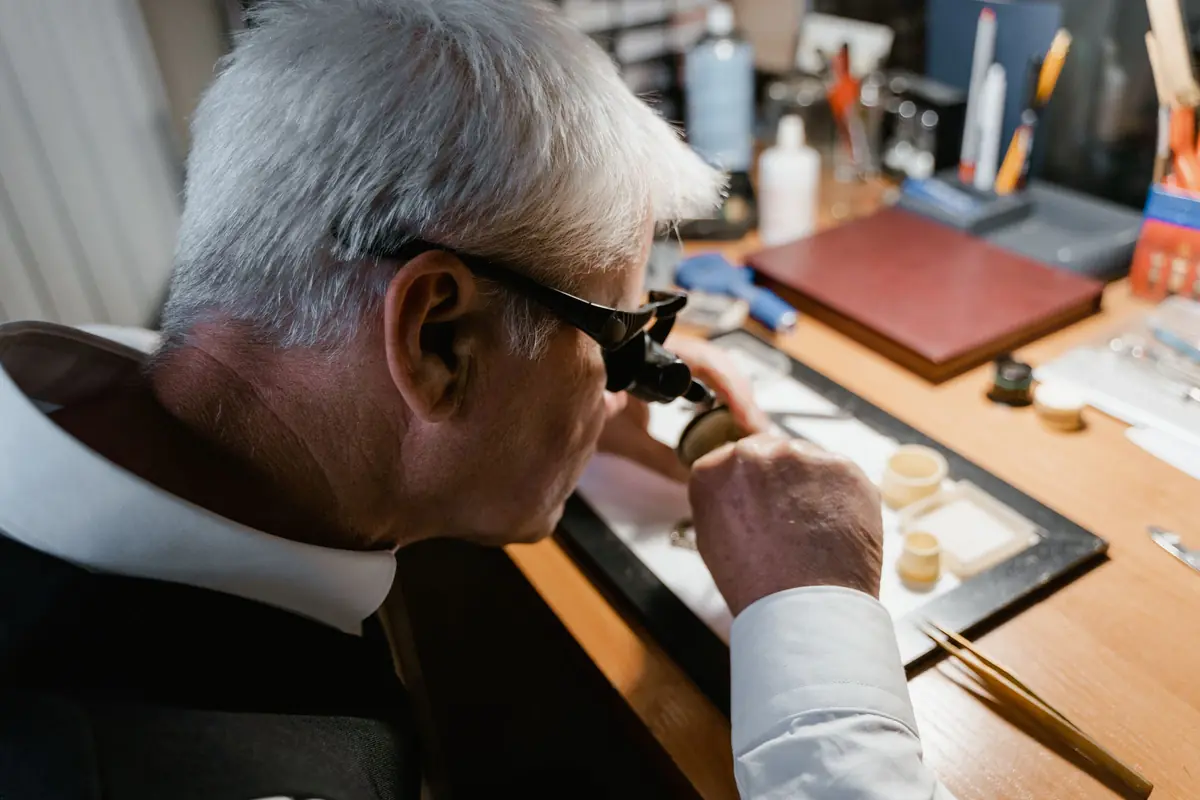
A used luxury watch is priced from the outside in. A buyer starts with what the exact reference has recently sold for on the secondary market, then adjusts for this particular watch: the condition of the case, bracelet and dial, whether every part is original, whether it runs well, and whether the box and papers are present. Last comes the cost of reselling it. The original retail price matters much less than most owners expect; some references trade well above it, and many trade well below.
That means two watches with the same name on the dial can be thousands of dollars apart. The rest of this article follows the order an experienced buyer actually works in, so you can see where each part of a number comes from and check it yourself.
The reference number comes first
Model names are marketing; reference numbers are what the market prices. “Rolex Submariner” covers dozens of references across seven decades, in steel, two tone and solid gold, with and without a date. “Patek Philippe Nautilus” covers steel, rose gold, white gold, complications and gem set versions. Before anything else a buyer identifies which one is on the counter.
- Rolex engraves the reference number on the case between the lugs at 12 o’clock, under the bracelet end link, and the serial number between the lugs at 6 o’clock; newer watches also carry the serial on the inner ring around the dial. The suffix letters matter: on a modern Submariner, LN means a black bezel and LV a green one.
- Patek Philippe, Audemars Piguet and most other Swiss houses put the reference and case number on the caseback, and the guarantee papers repeat them.
- Omega uses long references that encode case material, size and movement, so a full number is far more useful than a model name.
Within one reference, the dial can move the price again. A Daytona 116500LN with a white dial and one with a black dial trade at different levels. A dial stamped with a retailer’s name, a rare color, or a factory gem set dial can carry a large premium. A replacement dial fitted at a service, or an aftermarket diamond dial, usually pulls the price down. The buyer is identifying all of this in the first few minutes.
Where the market price comes from
Once the reference and dial are confirmed, the buyer looks for evidence of what it trades for now. There are three main kinds of data, and they are not equal.
| Source | What it shows | How much weight it deserves |
|---|---|---|
| Online marketplace listings | Asking prices from dealers and private sellers | Useful as a ceiling, but asks are not sales. Many listings sit unsold for months. |
| Auction results | Hammer prices, usually published with the buyer’s premium added | Real transactions, best for vintage and rare pieces, but each lot is a single data point with its own condition. |
| Dealer network trades | What dealers pay each other this week | The most current wholesale signal for liquid references. |
The most common mistake a seller makes is quoting the highest asking price they found online. A listing at a given number tells you someone hopes to get it. A cluster of completed sales at a lower number tells you what the watch is worth. Buyers of New York’s watch buyers say they check live secondary market pricing for the specific reference before making an offer and show the seller the data they are using, which is the right standard to hold any buyer to.
Retail price and discontinuation
Retail still has an indirect effect. When a brand raises list prices, pre-owned prices for current models tend to drift up with them. When a reference is discontinued, it can move either way: some, like the green Submariner known as the Hulk, became collector pieces with their own premium, while others simply lose ground to the newer model. Collectors often know these references by nickname, and the nickname can carry its own price.
Condition: what a buyer checks with a loupe
Condition is assessed part by part, not with one overall word. A typical examination covers:
- Case. Sharp edges on the lugs and crisp lines between brushed and polished surfaces suggest an unpolished case. Rounded lugs, soft bevels and a uniform shine suggest heavy polishing, which removes metal and cannot be reversed.
- Bracelet. Hold the watch by the case and see how far the bracelet droops. Worn pins and links produce “stretch”, common on older folded link bracelets. Missing links shorten the bracelet and are expensive to replace.
- Crystal and bezel. Chips on a sapphire crystal, cracks or fading on a bezel insert, and a bezel that no longer clicks properly are each priced in.
- Dial and hands. Spots, water marks, flaking print and mismatched luminous material on dial and hands are checked closely. On vintage pieces, even aging is valued; on modern pieces, any dial damage is a cost.
- Movement. The buyer checks that it winds, sets and runs, and often puts the watch on a timing machine to see the rate and amplitude. A weak result means a service in the near future, and that cost comes off the price.
For modern watches, the closer to unworn, the better. For vintage watches the rules change: honest wear with original surfaces beats a refinished case every time. If you are wondering whether to service or polish before selling, our post on servicing and polishing before a sale covers it; the short answer from the shop’s own FAQ is to bring the watch as it is.
Originality and authenticity
A buyer confirms the watch is genuine and then confirms it is all original. Those are different checks.
Authenticity checks include the engravings on the case and inner ring, the quality of the dial print under magnification, the date magnifier, the clasp stamps and codes, the movement where it can be viewed, and whether the serial on the case matches the serial on any papers. A mismatch between papers and case is a serious problem, because papers can be sold separately.
Originality is subtler. A genuine watch can carry non original parts: an aftermarket bezel, a replacement crown, a bracelet from a different era, a dial from a later service. Each one is priced as a deduction, and for vintage references a wrong dial or hands can take away most of the collector premium.
Completeness and paperwork
A full set means the original box, the warranty card or certificate with matching serial, booklets, tags and sometimes the original receipt. A full set makes the watch easier to resell and easier to trust, so it raises the price on most references. The size of that difference is its own topic, covered in our post on what box and papers add. Service receipts from the brand also help, since they document both the work and the parts that were changed.
Precious metal, gem set and age
A watch in solid gold or platinum has a floor that a steel watch does not: if the market for that reference ever weakened badly, the case and bracelet would still be worth their metal. For heavy gold watches, especially full gold bracelets, that floor can be a meaningful share of the price, so buyers weigh and test the metal as well as pricing the reference. The opposite applies to gem setting. Diamonds set at the factory, documented on the papers and correct for the reference, can add real value. Diamonds added afterwards by an outside jeweler, on the bezel, dial or bracelet, usually reduce it, because collectors want the watch as the brand made it and the work often damages the case.
Age cuts both ways. A watch that is a few years old competes directly with new stock and with dozens of identical used examples, so its price tracks the current model closely. A vintage watch is priced as a collectible, where originality, honest wear and rarity of the exact dial and case details matter more than shine. Between the two sit watches roughly ten to thirty years old, which usually trade as sound used watches: a recent service, a clean dial and a straight bracelet help them most.
Service history
A recent factory service documented by the brand helps price a watch with confidence, because the buyer knows the movement has been overhauled and which parts were changed. An independent service is fine if the work was done well, but a buyer will still check whether original parts such as hands, dial or bezel were swapped along the way. A watch with no service record is simply priced with the cost of a future service in mind.
From market value to an actual offer
This is the part sellers find hardest to accept, so it helps to see it laid out. A buyer who pays cash today has to resell the watch later, and the cost of doing that comes out of the price. Those costs include any service or refinishing the watch needs, photography and listing fees, payment processing, insurance, the time the watch sits in inventory, the risk that the market moves before it sells, and any warranty the reseller offers.
A worked example with hypothetical numbers
Suppose completed sales show a particular steel sports reference, in good condition with box and papers, selling to retail buyers at around $10,000. Now look at the watch on the counter:
- It has the box but no warranty card. Comparable sales without papers sit lower, so the starting figure drops.
- The timing machine shows low amplitude, so it needs a service soon. The buyer deducts the expected service cost.
- The bracelet has noticeable stretch. A replacement or a lower resale price is factored in.
- Then the buyer subtracts the resale costs above and a margin for the risk of holding it.
What is left is the offer. The steps matter more than any single percentage. A good buyer will tell you which comparable sales they used and which deductions they made, and you can check each one.
If two offers are far apart, ask each buyer which reference and which comparable sales they priced from. Disagreements usually trace back to a misidentified reference, a missed dial variant, or a condition issue one of them did not see.
Liquidity: why some watches price tighter than others
A watch that sells within days to many buyers is priced close to its market value, because the buyer’s risk is small. Steel sports models from the best known houses sit in that group. A precious metal dress watch, an unusual complication, or a less followed brand can take much longer to resell and attracts fewer buyers, so the gap between market value and offer is wider. Fashion watches with little secondary market are at the far end; Buyers of New York’s FAQ says it typically declines those, and assesses mid tier Swiss brands case by case.
Market cycles feed into this too. Secondary prices for many steel sports references rose sharply and then corrected in recent years, while some dress watches and complications held steadier. Since prices move, any number you saw months ago is out of date; ask for a current figure.
How to estimate your own watch before you go
- Find the full reference number and serial, and note the dial color and any text on the dial beyond the brand name.
- Search for completed sales of that exact reference, not just listings. Filter for the same set (with or without papers) and a similar year.
- Look honestly at condition: lug edges, bracelet stretch, crystal, bezel, whether it keeps time.
- Gather everything that came with it, including extra links and old receipts.
- Expect a cash offer to sit below the retail prices dealers charge, for the reasons above.
What to bring, and getting a current figure
Bring the watch unpolished and unserviced, every piece of the original set you still have, extra links, service receipts, and a photo ID. Buyers of New York buys Rolex, Patek Philippe, Audemars Piguet, Cartier, Omega, IWC and other major brands, with or without box and papers, and its site says most evaluations take 15 to 20 minutes, with payment by cash or same day wire.
The shop is at 30 W. 47th Street, Suite 8006, open Monday to Friday from 10am to 6pm, no appointment needed. Call (212) 642-4345 with your reference number for a phone estimate, or see the watch buying page for directions from every Manhattan neighborhood. To read how the shop approaches specific brands first, the Chelsea watch page lists the references it sees most.
More questions sellers ask
Why is an online asking price higher than the offer I received?
Asking prices are what sellers hope to get, and many listings never sell at that number. A cash offer is based on completed sales and has to cover the buyer's costs of servicing, listing, holding and reselling the watch.
Does a watch need to be running to be sold?
No. A watch that does not run is still valued; the expected cost of a service or repair is deducted. Buyers of New York says it buys watches that need servicing and advises not to service them first, especially vintage pieces.
Where do I find the reference number on my watch?
On a Rolex it is engraved on the case between the lugs at 12 o'clock, under the bracelet. Most other Swiss brands show it on the caseback, and the warranty card or certificate usually repeats it.
Do aftermarket diamonds add value to a luxury watch?
Usually not. Collectors want a watch as the brand made it, so diamonds added after sale by an outside jeweler generally lower the price, while factory set diamonds that match the papers can add value.
How long does a watch evaluation take?
Buyers of New York says most evaluations are completed in 15 to 20 minutes, with payment by cash or same day wire if you accept.